
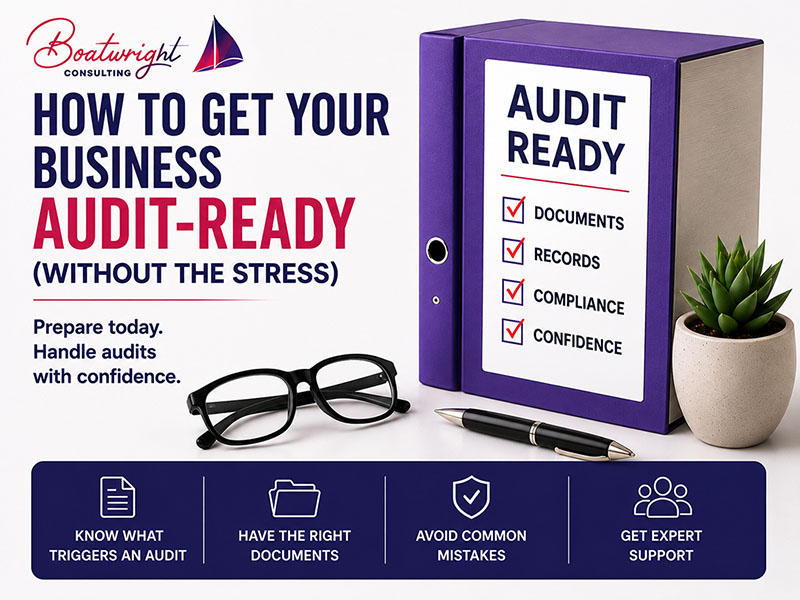
For many business owners, receiving a notification from the South African Revenue Service (SARS) about an audit can be intimidating. Words like “audit” often create unnecessary anxiety, leading people to assume that something has gone seriously wrong.
The reality is that a SARS audit is simply a review of your tax affairs to verify that the information submitted is accurate and supported by appropriate documentation. In many cases, audits are routine, and businesses that maintain good financial records often move through the process with minimal disruption.
The key is preparation.
Being audit-ready isn’t about scrambling to find paperwork when SARS contacts you—it’s about building good financial habits throughout the year. With organised records and the support of an experienced accountant, your business can approach an audit with confidence rather than concern.
What Is a SARS Audit?
A SARS audit is a formal review of your financial records and tax submissions to confirm that your tax obligations have been met correctly.
During an audit, SARS may compare information submitted on your tax returns with supporting documentation such as:
- Financial statements
- Bank records
- VAT returns
- Payroll records
- Invoices and receipts
- Third-party information received from employers, banks or financial institutions
An audit does not necessarily mean SARS suspects fraud or wrongdoing. Many audits are selected as part of normal compliance procedures.
What Can Trigger a SARS Audit?
Although some audits are completely random, certain factors may increase the likelihood of your business being selected.
Inconsistent Financial Reporting
One of the most common triggers is inconsistency between different tax submissions.
Examples include:
- VAT returns that don’t align with turnover reported in financial statements.
- PAYE submissions that differ from payroll records.
- Income declared that doesn’t match third-party information received by SARS.
With increasingly sophisticated data matching systems, SARS can quickly identify discrepancies that warrant further investigation.
Unusual Deductions or Claims
Large or unusual deductions may also attract attention.
Examples include:
- Significant business expenses that differ substantially from previous years.
- Large travel or entertainment claims.
- Home office deductions that appear excessive.
- Major once-off losses or write-offs.
This doesn’t mean such deductions are incorrect—only that SARS may request supporting evidence before accepting them.
Random Selection
Not every audit has a specific trigger.
SARS routinely selects taxpayers at random as part of its ongoing compliance programme.
This means even businesses with excellent accounting records may occasionally be audited.
Being prepared at all times is therefore the safest approach.
Documents You Should Have Readily Available
One of the biggest causes of delays during an audit is incomplete documentation.
Businesses should always maintain organised records that are easy to access if SARS requests them.
Important documents include:
Financial Statements
Your annual financial statements provide the foundation for many tax calculations and should always be complete and accurate.
Bank Statements
SARS may compare deposits and withdrawals against reported income and expenses.
Having complete bank records available helps answer questions quickly.
Invoices and Receipts
Every business expense claimed should be supported by valid documentation.
This includes:
- Supplier invoices
- Tax invoices
- Proof of payment
- Purchase receipts
Electronic copies are generally acceptable, provided they remain clear and accessible.
Payroll Records
If your business employs staff, maintain complete payroll records including:
- Employment contracts
- Payslips
- EMP201 submissions
- EMP501 reconciliations
- UIF and SDL records
Accurate payroll documentation demonstrates compliance with employer tax obligations.
Common Mistakes That Cause Problems
Many audit issues stem from simple administrative oversights rather than deliberate errors.
Some of the most common include:
Missing Documentation
Claiming expenses without supporting invoices is one of the fastest ways to create complications during an audit.
If you cannot prove an expense, SARS may disallow the deduction.
Incorrect Tax Filings
Simple errors such as:
-
Incorrect VAT calculations
- Misclassified income
- Duplicate entries
- Omissions
can all trigger further questions from SARS.
Regular reviews reduce the likelihood of these mistakes.
Poor Record-Keeping
Businesses that wait until year-end to organise their finances often struggle during an audit.
Keeping accounting records current throughout the year makes responding to SARS significantly easier.
Practical Ways to Stay Audit-Ready
Preparing for an audit isn’t something that should happen only after SARS contacts you.
Instead, build good habits into your normal business operations.
Keep Your Books Up to Date
Regular bookkeeping ensures financial information remains accurate and complete.
Waiting months before capturing transactions often leads to forgotten expenses and missing documentation.
Reconcile Your Accounts Regularly
Monthly reconciliations help identify discrepancies before they become larger compliance issues.
This includes:
- Bank reconciliations
- VAT reconciliations
- Debtor and creditor reconciliations
- Payroll reconciliations
Store Documents Securely
Maintain organised digital and physical filing systems.
Cloud-based document storage also provides additional security and makes retrieving information much quicker when needed.
Review Tax Positions Before Submission
Before submitting returns, ensure figures agree with your accounting records.
A second review often identifies simple errors before SARS does.
How an Accountant Helps During an Audit
One of the biggest advantages of working with a professional accountant is having experienced support if SARS requests information.
Boatwright Consulting assists clients by:
- Reviewing accounting records before submission
- Identifying potential compliance risks
- Preparing accurate tax returns
- Ensuring documentation is complete
- Responding to SARS audit queries
- Communicating directly with SARS where appropriate
Having professional representation often makes the audit process smoother and less stressful for business owners.
The Benefits of Being Audit-Ready
Businesses that maintain strong financial records enjoy benefits beyond SARS compliance.
Good record-keeping supports:
- Better financial decision-making
- Improved cash flow management
- Easier access to business finance
- More accurate budgeting
- Reduced year-end stress
- Faster preparation of annual financial statements
In many ways, preparing for an audit also prepares your business for long-term success.
Final Thoughts
A SARS audit doesn’t have to be a source of panic.
With accurate bookkeeping, organised documentation and proactive financial management, your business can approach an audit confidently and efficiently.
The sooner good accounting practices become part of your daily operations, the easier every future tax season becomes.
Prepare for Audits with Confidence
If you’d like to ensure your business is audit-ready, Boatwright Consulting is here to help.
Our experienced team can review your records, strengthen your compliance processes and provide professional support should SARS ever request additional information.